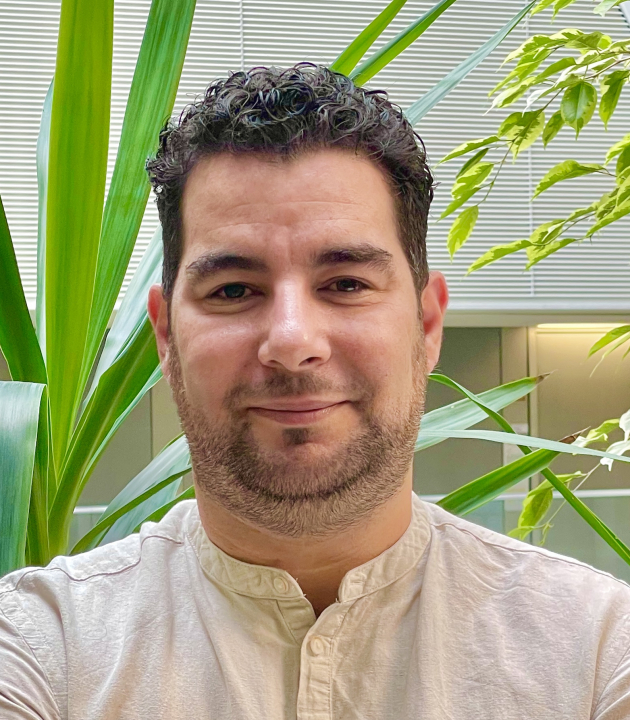
Skander Hathroubi
Biofilm & Antimicrobial Coatings Expert R&D Microbiology | Wound Care | Biomaterials | Medical Materials | Helping Translate Antimicrobial Science into Credible Anti-Biofilm Evidence |
Biofilm microbiology
Antimicrobial coatings, biomaterials and hydrogels
Wound-care materials
Antimicrobial peptides
Scientific writing, patents, and project leadership
41 years old
France
Employed
Open to opportunities
I am a Senior R&D Scientist and Project Leader specialized in biofilm microbiology, antimicrobial coatings, wound-care materials, biomaterials, antimicrobial peptides, and delivery systems. My work focuses on translating microbiology, surface science, and biomaterials into credible biological evidence for medical materials and product development. I help design and interpret antimicrobial and anti-biofilm testing strategies, including bacterial adhesion, biofilm models, coating validation, cytotoxicity, leaching, accelerated aging, and product-relevant biological performance.
Postdoctoral researcher
University of California, Santa Cruz
November 2016
to June 2019

- Postdoctoral research focused on Helicobacter pylori biofilm formation and its potential contribution to bacterial persistence, antibiotic tolerance, and pathogenesis.
- The work combined transcriptomic, genetic, imaging, and infection-model approaches to identify genes and pathways involved in H. pylori biofilm development on abiotic and biotic surfaces. Experimental approaches included mutant characterization, RNA-seq/transcriptomic analysis, mouse models of H. pylori infection, confocal scanning laser microscopy (CSLM), and scanning electron microscopy (SEM) to study biofilm structure, composition, and in vivo behavior.
- Selected publications:
• Hathroubi et al., 2018 — Helicobacter pylori biofilm formation and its potential role in pathogenesis. Microbiology and Molecular Biology Reviews.
• Hathroubi, Zerebinski & Ottemann, 2018 — Helicobacter pylori biofilm involves a multigene stress-biased response, including a structural role for flagella. mBio.
• Hathroubi, Hu & Ottemann, 2020 — Genetic requirements and transcriptomics of Helicobacter pylori biofilm formation on abiotic and biotic surfaces. npj Biofilms and Microbiomes.
• Hathroubi, Zerebinski, Clarke & Ottemann, 2020 — Helicobacter pylori biofilm confers antibiotic tolerance in part via a protein-dependent mechanism. Antibiotics.
• Tachiyama et al., 2022 — The flagellar motor protein FliL forms a scaffold of circumferentially aligned subunits essential for torque generation in Helicobacter pylori. PNAS.
• Elshenawi et al., 2025 — Genetic basis of gap formation between migrating Helicobacter pylori colonies in soft agar assays. Microorganisms.